


Chat window
Move between items in the chat window
Tab key
Shift + tab key
Do action
Enter key
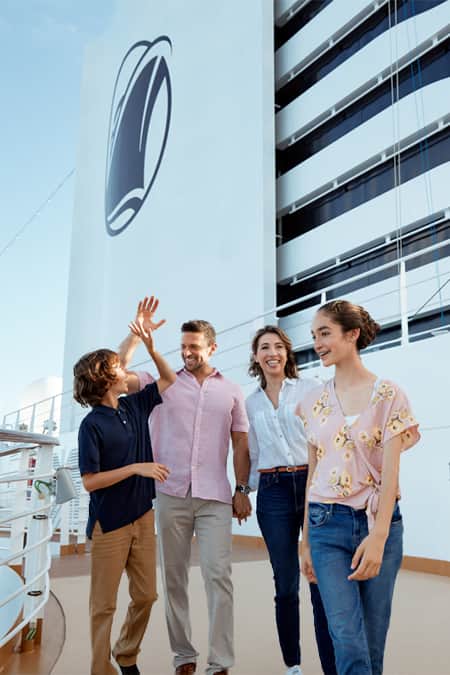

Available through our partnerships with local guides and suppliers, shore excursions cover an array of amazing places and experiences.
Curated Shore Excursions
We've curated a collection of tours and excursions to bring you once-in-a-lifetime, authentic experiences for every age and ability level.

Connect with local experts for enriching and sustainable experiences focused on nature, culture, and science.

The wide world you treasure is made enjoyable, enchanting and accessible in equal parts.

Take a closer look at the events, people and places that have shaped humanity and sparked interest for centuries.

Exclusive sightseeing curated just for your party — each day experienced entirely on your own terms.

Visit a coffee plantation or winery and learn how different countries make these everyday goods.

Savor the flavors of the region direct from the source at these regional culinary themed excursions.

In Alaska, you can go on a fishing expedition and have your catch served fresh the same evening in the Dining Room.

We'll get you back to the ship on time, or we'll wait for you. You'll also enjoy an earlier departure off the ship, a full refund if the port is missed, and cancellation flexibility.

If you find a lower price on any identical shore excursion, we'll give you an onboard credit worth 110% of the difference.

Trust that you’ll get the best experience, safety, and value with our licensed, insured, and professional local operators and guides.

Whether you're looking to explore at a leisurely pace or want to zipline down a mountain, we have a range of excursions for all ability levels and interests.
The shore excursion reservation office is available to assist you Monday-Friday, 7:00am–5:00pm PT; Saturday-Sunday, 7:00am–4:00pm PT. Simply call 1 (888) 425-9376 to speak with an agent.

By OnieJoy
What an awe-inspiring adventure! Every step of the excursion was conducted by professional, fun and helpful people. The feeling of kayaking in such a beautiful place is indescribable. All levels of kayaking experience welcome. After the adventure (bald eagles, salmon and starfish were seen on our trip) the crew surprised us with a delicious homemade treat! I totally recommend this trip!

By Micki
One of my favorite excursions ever. It was a fantastic trip through the cave. They rowed you through while shining a light on the stalagmites and stalactites. Just beautiful. You can hear and see the bats. I highly recommend this excursion.

By Caren L.
Our butler service upgrade was amazing. Monica met us at our stateroom and led the seven of us through transfer to a tender and onto the island. My daughter uses a walker/cane and she quickly had a jeep there to transport us down to the cabana. From that point on, all she did was help... Monica is the best! The island, cabana and food were fabulous, but Monica is the icing on the cake!

To find more information about Holland America Line cruises, peruse our Frequently Asked Questions.