
Caribbean Wildlife: Animals, Ecosystems, and Where to Experience Them
The Caribbean holds one of the richest concentrations of life on Earth, packing thousands of species into a scatter of islands and the warm sea between them. Caribbean wildlife ranges from coral reefs teeming with parrotfish and sea turtles to rainforest canopies alive with parrots and hummingbirds, and much of it exists nowhere else in the world. For travelers, this biodiversity is one of the region's great draws, turning a day ashore into a chance to encounter flamingos, iguanas, whales, and creatures found on a single island and nowhere else.
Holland America Line has spent decades charting these waters, and our Caribbean Cruises reach ports where wildlife takes center stage — from stingray encounters at RelaxAway, Half Moon Cay™ to reef snorkeling off Cozumel. This guide covers the animals, habitats, and destinations that define the region, along with how to experience them responsibly on a cruise.
Key Takeaways
- The Caribbean is a global biodiversity hotspot, home to more than 12,000 marine species and countless endemic land animals found on single islands.
- Signature species include sea turtles, flamingos, humpback whales, iguanas, and introduced monkeys on islands such as Grenada and Barbados.
- Distinct habitats — rainforests, mangroves, coral reefs, and dry forests — each support their own specialized wildlife.
- Dominica, Trinidad & Tobago, Bonaire, Puerto Rico, and the Dominican Republic rank among the best islands for wildlife experiences.
- Cruise shore excursions offer guided, low-impact access to reefs, stingray coves, and rainforest habitats across multiple islands in one trip.
Sign Up for Special Offers
Be the first to know about exclusive cruise deals, new itineraries, and limited-time offers.
What makes Caribbean wildlife so unique?
Caribbean Habitats and Ecosystems
Major Habitat Types
The variety of Caribbean animals reflects the variety of places they live, and a single island can hold several distinct habitats, each supporting its own community of species.
- Rainforests on islands like Puerto Rico and Dominica shelter amphibians, birds, and insects
- Mangrove forests act as nurseries for fish, crustaceans, and coastal birds
- Coral reefs host thousands of marine species, from reef fish to invertebrates
- Coastal beaches serve as nesting grounds for sea turtles
- Dry forests and savannas support reptiles, small mammals, and birdlife
Iconic Caribbean Land Animals and Mammals
Notable Species
The region's native land mammals tend to be small, secretive, and often ancient — a signature of island evolution that has produced animals found nowhere else.
- Mona monkeys in Grenada, an introduced species now woven into local ecosystems
- Agoutis, small rodent-like mammals found across several islands
- Bats, the most common native land mammals and vital pollinators and insect controllers
Bird Species of the Caribbean
Standout Birds to Highlight
With more than 550 recorded bird species, the Caribbean is a premier destination for birdwatching, and several standouts define the region's skies and shorelines.
- Caribbean flamingos, forming large pink colonies in Bonaire and the Bahamas
- Scarlet ibis, the vibrant red national symbol of Trinidad & Tobago
- Parrots, including endangered island-specific species such as the Puerto Rican parrot
- Hummingbirds, including the bee hummingbird of Cuba, the smallest bird in the world
- Frigatebirds and pelicans, common along coastlines and harbors
Marine Wildlife and Reef Ecosystems
The Caribbean Sea is where the region's wildlife reaches full spectacle. Its coral reefs support more than 12,000 marine species and account for roughly a tenth of the world's coral habitat, providing food and shelter for an immense web of life. Reef residents include parrotfish, stingrays, nurse sharks, and spiny lobsters, while seagrass beds quietly anchor the food chain and protect coastlines from storms.
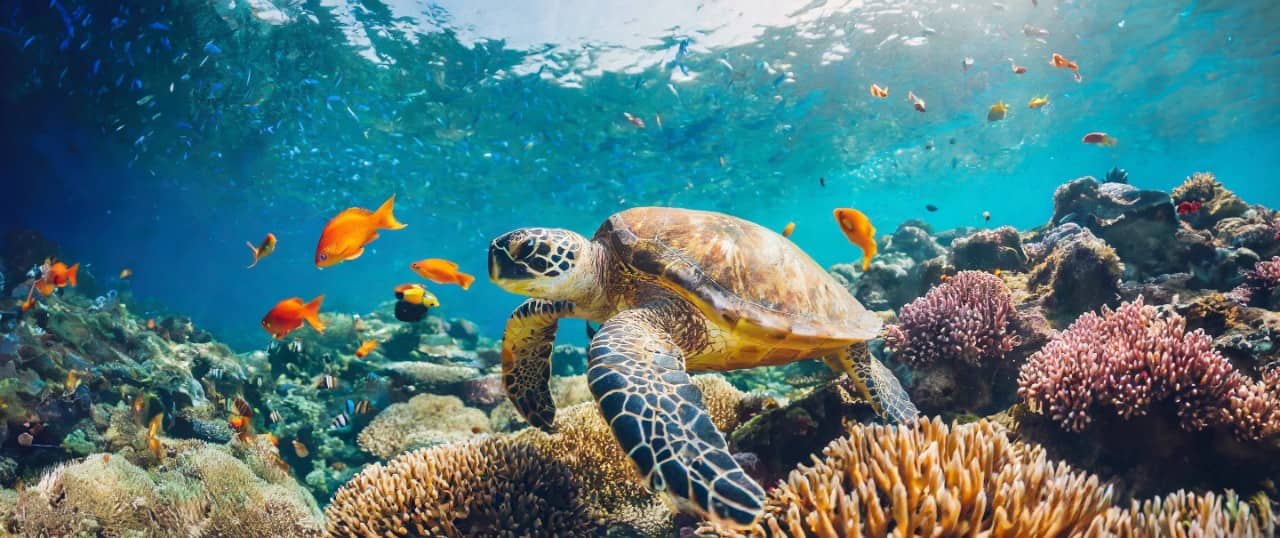
Larger animals move through these same waters. Green, hawksbill, and leatherback sea turtles nest on beaches across the region, and marine mammals such as dolphins, sperm whales, and humpback whales migrate to or reside in the warm sea. Together these species make Caribbean waters one of the most rewarding places on the planet to explore marine life.
Reptiles, Amphibians, and Small Creatures
Key Species Groups
Cold-blooded and small-bodied species thrive in the Caribbean's warm climate, and their diversity is remarkable even by tropical standards.
- Iguanas, including common green iguanas and the endangered rhinoceros iguana
- Caribbean frogs such as the coquí, known for its distinctive nighttime call
- American crocodiles, found in coastal wetlands and estuaries
- Insects and butterflies that drive pollination across island habitats
- Hundreds of reptile species adapted specifically to island life
Endemic vs Introduced Species in the Caribbean
Conservation Efforts and Wildlife Protection
Best Caribbean Islands for Wildlife Experiences
Top Destinations
Wildlife is spread unevenly across the Caribbean, and a few islands stand out for the richness and accessibility of their animal life.
- Dominica, for whale watching and dense rainforest biodiversity
- Trinidad & Tobago, for world-class birdwatching and wetland ecosystems
- Bonaire, for flamingo colonies and protected marine parks
- Puerto Rico, for rainforest wildlife and bioluminescent bays
- Dominican Republic, for humpback whales in Samaná Bay
Each destination rewards a different interest. Dominica and the Dominican Republic are prime for marine mammals, Bonaire and Trinidad for birds, and Puerto Rico for a mix of forest and coastal wildlife — making it easy to match an itinerary to what you most want to encounter.
Wildlife Viewing Experiences on Caribbean Cruises
Featured Shore Experiences
Cruise shore excursions turn wildlife curiosity into hands-on encounters, with expert guides and access to protected sites. Standout options across Holland America's Caribbean ports include:
- The Atlantis Submarine Adventure in Aruba, descending to reef depths without getting wet
- Stingray Cove at RelaxAway, Half Moon Cay™, where guests can interact with these graceful rays
- Reef snorkeling in Cozumel, among some of the Caribbean's most vivid marine life
- Monkey Land near Amber Cove, a place for up-close encounters with squirrel monkeys
- Horseback riding at RelaxAway, Half Moon Cay™, pairing beachfront scenery with gentle animal encounters
How Human Activity Shapes Caribbean Wildlife
Planning a Caribbean Wildlife Experience
Discover Caribbean Wildlife Through Cruise Travel
A Caribbean cruise is one of the most efficient ways to experience the region's wildlife, connecting multiple ecosystems and islands in a single itinerary without the logistics of independent travel. In one voyage you can snorkel a reef, walk a rainforest trail, and watch for seabirds along the coast, with guided shore excursions deepening every stop.
Discover wonders near and far on our Caribbean cruises. Visit San Juan's historic sites, explore the ocean floor in St. Thomas, experience St. Kitts' UNESCO-listed Brimstone Hill Fortress, or watch for sloths and more from Costa Rica's Puerto Limón.
FAQs About Caribbean Wildlife
What wildlife is in the Caribbean?
The Caribbean is home to a remarkable range of wildlife, including sea turtles, reef fish, dolphins, and whales offshore, plus iguanas, parrots, flamingos, monkeys, and endemic mammals like hutias on land. Many species live on only a single island, making regional biodiversity exceptionally high.
Which Caribbean island has the best wildlife?
Dominica, Trinidad & Tobago, and the Dominican Republic consistently rank highest for wildlife. Dominica excels for whales and rainforest species, Trinidad & Tobago for birdwatching, and the Dominican Republic for humpback whales in Samaná Bay. The best choice depends on the animals you most want to encounter.
Do Caribbean islands have monkeys?
Yes. Islands such as Grenada and Barbados have established monkey populations, though most were introduced from Africa centuries ago rather than being native. Today they are integrated into local ecosystems and are a common sight for visitors.
What is the most famous animal in the Caribbean?
Sea turtles and flamingos are among the region's most recognizable animals, along with marine mammals like dolphins and humpback whales. Sea turtles nest on beaches across the Caribbean, while flamingos form striking pink colonies or “flamboyances,” in places like Bonaire and the Bahamas.
When is the best time to encounter Caribbean wildlife?
It depends on the species, so timing your trip around a specific animal yields the best encounters.. Humpback whale watching peaks from January to March, while birdwatching and reef marine life can be experienced year-round. Sea turtle nesting generally occurs in the summer months.