
Caribbean Culture: History, Flavors, Influences, and Island Identities
Experience Caribbean culture through its history, flavors, music, festivals, and island traditions shaped by global influences and local identities.
Steel drums ring out from a market square, the air carries clove and allspice, and three languages braid through a single conversation — this is one of the world’s most vibrant cultural mosaics. Caribbean culture is the living result of Indigenous, African, European, and Asian influences meeting across centuries of migration, trade, and resilience. Stretching from the Greater Antilles to the Lesser Antilles and the surrounding mainland coasts, the region shares a common thread of creativity and community while every island shapes its own distinct identity.
That balance of unity and individuality is what makes Caribbean culture so rewarding to explore. A shared history binds the islands together, yet each one expresses itself through its own food, music, architecture, and traditions. Guests ready to encounter these traditions firsthand can begin with Caribbean Cruises, where ports across the region open the door to centuries of layered heritage.
Key Takeaways
- Caribbean culture is a fusion of Indigenous, African, European, and Asian influences shaped by centuries of migration and exchange.
- Each island carries a distinct identity, so cuisine, festivals, language, and architecture vary widely across a shared regional heritage.
- Music, food, storytelling, and faith are the cultural threads that connect daily life from Jamaica to Trinidad to the Dominican Republic.
- Festivals such as Carnival, Junkanoo, and Crop Over turn history and emancipation into public celebration and artistry.
- Shore excursions let guests experience these living traditions directly, from culinary workshops to heritage landmarks.
What Caribbean Culture Means
Caribbean culture reflects centuries of blending among Indigenous peoples, African diasporas, European colonial powers, and Asian migrants. Each group left a lasting imprint on language, faith, foodways, and the rhythms of community life. The result is not a single uniform identity but a family of related cultures that recognize one another across the water.
The region’s geography reinforces that pattern. The Greater Antilles, the Lesser Antilles, and the surrounding territories sit close enough to share music, recipes, and history, yet remain distinct enough to nurture their own customs. Three themes run through it all: resilience in the face of a difficult past, boundless creative expression, and transculturation — the constant convergence that turns separate traditions into something new.
Table of Contents
- What Caribbean Culture Means
- Cultural Diversity Across Caribbean Islands
- How History Shaped Caribbean Culture
- Languages and Storytelling Traditions
- Musical Heritage — The Rhythm of Caribbean Life
- Festivals, Rituals, and Community Traditions
- Religion, Spirituality, and Belief Systems
- Caribbean Cuisine — A Journey Through Flavor
- Art, Craftsmanship, and Architectural Identity
- Sports, Leisure, and Everyday Life
- Experiencing Caribbean Culture on Shore
- The Heart of Caribbean Culture
- Caribbean Culture FAQs
Sign Up for Special Offers
Be the first to know about exclusive cruise deals, new itineraries, and limited-time offers.
Cultural Diversity Across Caribbean Islands
No two Caribbean islands feel quite the same. Spanish-, English-, French-, and Dutch-influenced islands each reflect a different colonial past, and those histories still echo in everyday life. Cuisine, festivals, etiquette, and architecture can shift dramatically from one harbor to the next, even when the islands share African and Indigenous roots.
Food often signals an island’s lineage first. Spanish-speaking islands lean on sofrito and slow-stewed meats, while curry and roti reveal the deep Indian presence in Trinidad. Festivals differ just as sharply, varying by theme, rhythm, and costume style, and local etiquette tends to blend European formality with unmistakable African warmth. Architecture tells the same story, ranging from Georgian townhouses to brightly painted Creole dwellings along the waterfront.
These contrasts are easiest to appreciate in person. An excursion such as Discover Falmouth: The Heartbeat of Jamaica highlights Jamaican architecture, heritage landmarks, and local traditions, giving guests a close look at how one island carries its history into the present.
How History Shaped Caribbean Culture
Long before European ships arrived, Taino and Kalinago communities had already shaped the region’s agriculture, foodways, and place-names. Many words and ingredients still in use today trace directly back to these Indigenous foundations, a quiet but enduring layer beneath everything that followed.
The African contribution is immense and ever-present. Enslaved Africans and their descendants carried music, spirituality, cuisine, communal values, and oral traditions that became the backbone of Caribbean culture. From drumming patterns to proverbs to the structure of family gatherings, African heritage continues to define how the region sounds, tastes, and celebrates.
European powers added their own enduring marks. European languages produced the English-, Spanish-, French-, and Dutch-speaking islands; Christian denominations spread through missionary activity; and colonial architecture left Georgian mansions, Spanish plazas, and Dutch coastal buildings behind. Even governance systems across the islands still reflect those colonial administrative structures.
Later waves of Asian migration broadened the mix again, introducing new ingredients, festivals, and family traditions. Indian communities brought curries, roti, and Phagwah celebrations; Chinese migrants contributed stir-fries, noodles, and fusion dishes; and Asian heritage strengthened the region’s multigenerational household traditions. To step into this layered past, an excursion like Mayan Culture Experience explores a living community that still preserves its Indigenous cultural identity.
Languages and Storytelling Traditions
Language in the Caribbean acts as a map of its history. English, Spanish, French, and Dutch all took root through colonization, and alongside them grew a rich array of Creole languages shaped by African and European contact. Hearing several of these languages in a single market is one of the clearest signs of how interwoven the region truly is.
Storytelling carries that heritage forward. The famed Anansi tales emphasize wit and resilience, folklore brims with spirits and ancestral protectors, and proverbs pass down everyday wisdom at family gatherings, reinforcing generational identity. An excursion such as the Calypso Trolley Train offers insight into Belize’s language patterns, colonial architecture, and local storytelling traditions.
Musical Heritage — The Rhythm of Caribbean Life
Music acts as cultural memory and creative expression across the region, and Caribbean music is among the most recognizable in the world. Reggae and dancehall emerged from Jamaica’s narrative traditions, soca and calypso energize Trinidad’s Carnival, merengue and bachata reflect Dominican identity, and salsa and chutney embody the blend of African, Latin, and Indian influences that defines the islands.
More than entertainment, these rhythms animate festivals, streets, beaches, and community gatherings. A single song can trace a lineage of migration and resistance, which is why music remains one of the most powerful ways to understand the region from the inside.
Festivals, Rituals, and Community Traditions
Carnival is the region’s grandest stage, celebrating emancipation, identity, and artistry through elaborate costumes and music. But it is only the beginning. Junkanoo fills the streets of The Bahamas with drumming and costumed parades, Carifesta showcases regional arts and performance, and local celebrations like Crop Over in Barbados honor agricultural heritage.
Everyday rituals matter just as much as the headline festivals. Weddings blend religious and cultural traditions, funerals emphasize community support and remembrance, and shared meals reinforce a deep culture of hospitality. Neighborhood gatherings — built around dominoes, music, and food — keep these community bonds alive between the big celebrations, giving the region its warm, communal texture.
Religion, Spirituality, and Belief Systems
Christianity is widely practiced across the islands, but it shares the landscape with vibrant Afro-Caribbean faiths. Vodou and Santería blend African cosmology with Catholic symbolism, Obeah traditions focus on spiritual protection and healing, and Rastafarianism emphasizes African identity and natural living.
These belief systems rarely stand apart from daily life. They connect deeply to music, storytelling, and festivals — reggae often conveys spiritual messages, folklore carries moral lessons rooted in belief, and Carnival itself includes symbolic elements tied to faith. Spirituality, in other words, is woven through the broader fabric of daily life rather than confined to a single day of the week.
Caribbean Cuisine — A Journey Through Flavor
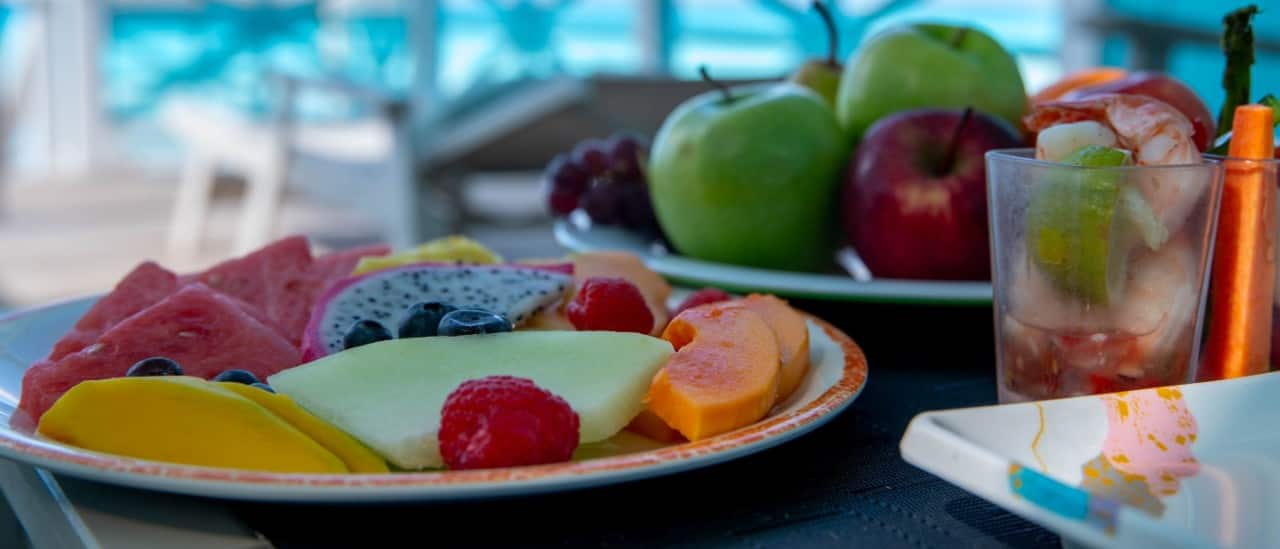
Few things express the region as immediately as its cooking. Caribbean food blends African, Indigenous, European, and Asian ingredients and methods into dishes that are bold, layered, and deeply tied to place. Markets, spices, and fresh produce anchor communal meals, and the kitchen is where the region’s history becomes something you can taste.
Traditional Dishes and Cultural Roots
- Jerk cooking combines African techniques with Indigenous methods for one of the region’s signature flavors.
- Callaloo, pepperpot, and hearty stews trace back to African and colonial influences.
- Roti, curry dishes, and pholourie connect directly to Indian migration.
- Ackee and saltfish blends African and British roots into Jamaica’s national dish.
Signature Ingredients and Local Produce
Tropical fruits, plantains, cassava, and just-caught seafood form the foundation of countless meals, while regional spices and herbs influenced by African and Asian flavors give each island its distinct profile. Markets double as cultural gathering spots, where buying dinner is also a chance to talk, trade news, and connect.
Rum and Cultural Identity
No conversation about Caribbean drinks is complete without rum, whose history is bound up with the economic story of the islands themselves. Distillery visits connect guests directly to that heritage. Culinary excursions deepen the experience further — options such as Chocolate, Tequila & Glass-Bottom Semi-Submersible explore cacao traditions and regional flavors, while a Mexican Cuisine Workshop & Tequila Experience teaches hands-on techniques that reflect the cultural blending of Caribbean-adjacent regions.
Art, Craftsmanship, and Architectural Identity
Art and architecture across the Caribbean reflect Indigenous symbolism, African creativity, and European influence, and together they preserve cultural identity in physical form. Whether handmade or hand-built, these works carry the same stories told in music and food.
Visual Arts and Handcrafted Traditions
- Wood carving and sculpture rooted in African and Indigenous techniques.
- Basket weaving and straw craft traditions passed down through generations.
- Colorful market crafts that express local creativity and daily life.
- Modern Caribbean art blending diasporic and contemporary styles.
Architecture and Historic Sites
Georgian mansions, Spanish plazas, and pastel façades line many island towns, alongside forts, lighthouses, and carefully preserved historic districts. An excursion such as San Gervasio Mayan Ruins & Chocolate Experience introduces ancient ceremonial structures whose influence still echoes through Caribbean architectural history.
Sports, Leisure, and Everyday Life
Cricket is more than a sport here — it is a unifying regional passion that draws islands together in friendly rivalry. Football, sailing, dominoes, and a relaxed beach culture round out daily leisure, while markets, food stalls, and seaside rhythms shape the pace of ordinary life. To understand the region, it helps to notice these everyday details as much as the festivals.
Experiencing Caribbean Culture on Shore
Guided experiences are the most direct way for guests to connect with traditions, cuisine, storytelling, and local history. Immersive excursions turn a day in port into an authentic cultural encounter rather than a passing glimpse.
Several shore excursions make that connection vivid: Dominican Coffee: A Local Experience reveals the island’s agricultural heritage and coffee traditions; Highlights of Ocho Rios & Konoko Gardens blends botanical exploration with cultural and historical insight; and Mayan City of Altun Ha & Belize City connects ancient Maya heritage with modern Belizean life.
Experience the Heart of Caribbean Culture with Holland America
Caribbean culture is defined by creativity, resilience, and centuries of blended influence expressed through food, music, language, and spirituality. From the rhythms of Trinidad to the markets of Curaçao, every island invites guests to explore a tradition that is centuries deep and still very much alive. Travelers inspired to encounter these vibrant traditions firsthand can browse our wide selection of Caribbean Cruise Itineraries and start planning a journey through the region’s living heritage.
Caribbean Culture FAQs
What are five aspects of Caribbean culture?
Five defining aspects are music, cuisine, languages, festivals, and community traditions. Each one reflects the region’s blend of Indigenous, African, European, and Asian influences, which is exactly what gives the region its richness and variety.
What is the Caribbean known for?
The Caribbean is known for its musical innovation, vibrant cuisine, and lively festivals. Distinctive colonial-era architecture and warm, communal hospitality also define the region and shape the experience guests find at nearly every port.
What makes Caribbean culture so diverse?
Centuries of migration and trade brought global influences together in one region. Because each island absorbed those influences differently, distinct traditions developed island by island, creating remarkable diversity within a shared Caribbean identity.
What languages are widely spoken in the Caribbean?
English, Spanish, French, and Dutch are all widely spoken, alongside numerous Creole languages. These language patterns reflect each island’s colonial history and remain one of the most visible markers of island identity today.